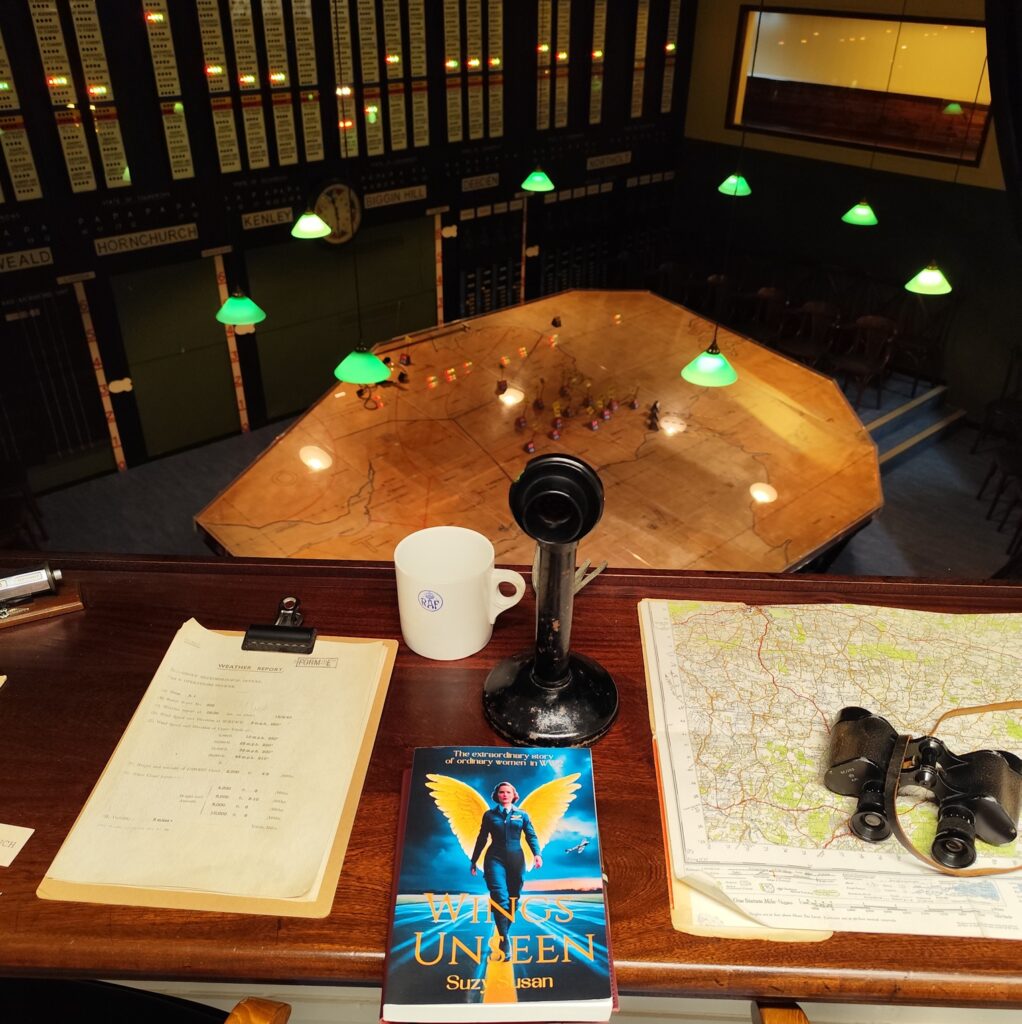

Visiting the Battle of Britain Bunker at RAF Uxbridge is like stepping straight into the heart of Wings Unseen. Hidden beneath an unassuming building, this underground operations room was where the fate of Britain’s skies was decided — not just by the fighter pilots roaring overhead, but by the calm, steady hands and sharp minds of the young women who worked below.
As you descend the bunker’s narrow stairwell, the air changes — cool and slightly musty, heavy with the weight of history. In Wings Unseen, women like Edith serve in places just like this.
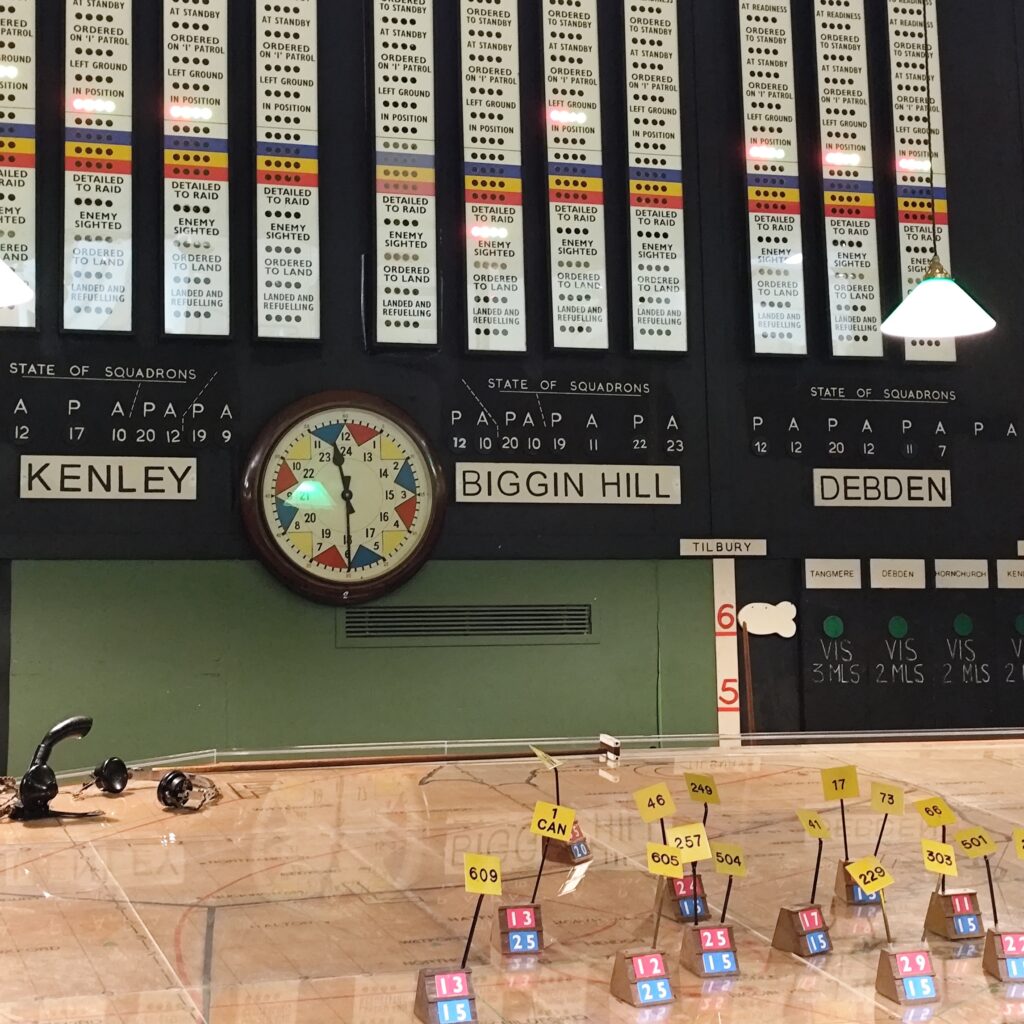
Inside, the original plotting table still dominates the room — a vast map once crowded with squadrons, enemy formations, and fighter commands scribbled in real time. It was here that WAAF personnel, many still teenagers, tracked incoming Luftwaffe raids with markers moved with long wooden rods, and relayed urgent updates to the commanders perched in the gallery above. Their vigilance meant pilots knew exactly when and where to strike — and when to come home.
Today, the bunker stands as a testament to the hidden army of women who held Britain’s defences together. In Wings Unseen, I wanted to bring these quiet heroines out of the shadows — to show the nerves of steel, the sleepless nights, and the relentless courage it took to keep fighter bases running, pilots safe and prevent the fall of Britain to Nazi Germany.
Walking through the bunker, you can almost hear it: the clatter of telephones, the soft shuffle of footsteps on concrete, the clipped voices of young women balancing fear and duty in the middle of the greatest air battle in history.
This place is more than a relic — it’s a reminder that the war was won not just by the men in cockpits, but by the thousands of women like my mother who worked, plotted, trained, and fought back in their own quiet, unstoppable way.
If you ever find yourself near Uxbridge, step inside this hidden room. Stand by the plotting table. Listen for their voices. And remember them.